Klaviyo Review 2026: Honest Take After 6 Months on Shopify
After 6 months running Klaviyo on a real Shopify store: what it does well, where it falls short, and what you'll actually pay at 10K and 25K contacts.
TL;DR: Klaviyo Review
Rating: 7.5/10
Klaviyo is one of the most powerful email and SMS marketing platforms available for Shopify stores, with best-in-class segmentation, predictive analytics, and a deep native integration. However, its aggressive pricing at scale and steep learning curve mean most small and mid-size Shopify stores end up paying for features they never fully use.
What Is Klaviyo?
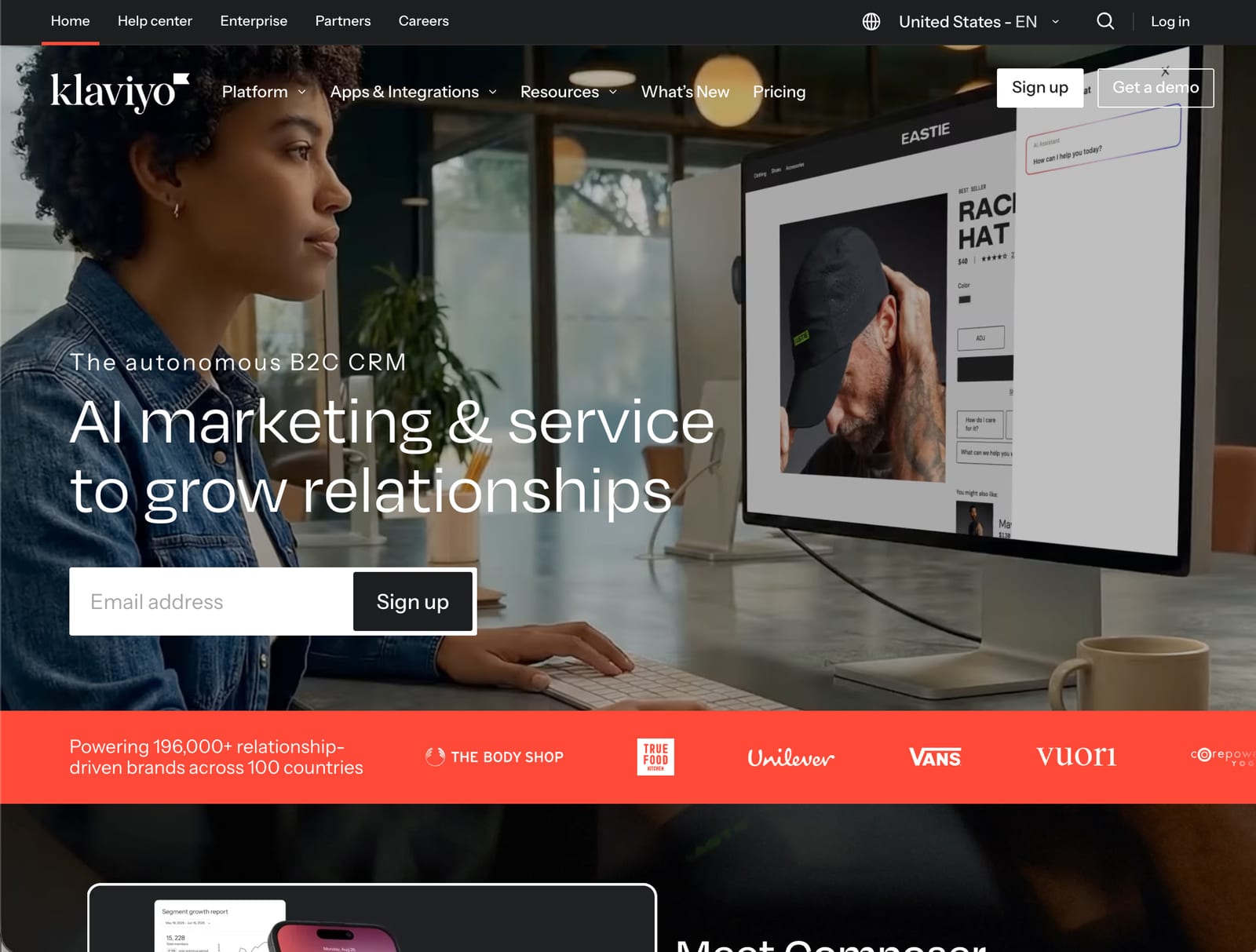
If you're reading this Klaviyo review for the first time, here's the quick overview. Klaviyo is a marketing automation platform designed primarily for e-commerce. It connects directly with Shopify (along with other e-commerce platforms) to pull in customer data, purchase history, and browsing behavior — then lets you build email campaigns, SMS messages, and automated flows based on that data.
Founded in 2012, Klaviyo went public in 2023 and has become the default recommendation for Shopify email marketing. It powers hundreds of thousands of online stores and has built a reputation as the "serious" option for e-commerce brands that want data-driven marketing.
But being the default recommendation doesn't mean it's the right fit for every store. That's what this review is about.
What Klaviyo Gets Right
Let's be clear upfront: Klaviyo is a genuinely excellent product in several important areas. A fair Klaviyo review has to start with what it does well, because the strengths are real.
1. The Deepest Shopify Integration Available
Klaviyo's Shopify integration is the benchmark every other platform is measured against. When you connect your Shopify store, Klaviyo syncs customer profiles, order history, product catalog, browsing behavior, and cart data in real time. It supports Shopify Flow, meaning you can trigger Klaviyo actions directly from events inside your Shopify admin.
What this means in practice: you can build a segment like "customers who bought a product from my summer collection more than 60 days ago, spent over $100 lifetime, and haven't opened an email in 30 days" — and have it update dynamically without touching a spreadsheet. Few platforms match this depth.
2. Advanced Segmentation That Actually Matters
Segmentation is where Klaviyo separates itself from most competitors. You can segment by virtually any combination of customer behavior, purchase history, email engagement, predicted metrics, and custom properties. The segment builder supports nested conditions, relative date ranges, and real-time updates.
For stores with large customer bases and diverse product catalogs, this level of segmentation enables genuinely personalized campaigns rather than one-size-fits-all blasts. If you sell both $20 accessories and $500 premium items, you can tailor messaging by customer tier — and that drives measurable revenue.
3. Predictive Analytics for E-Commerce
Klaviyo offers predictive analytics features that most competing platforms simply don't have. For each customer, Klaviyo generates predictions for:
- Expected date of next order — useful for timing replenishment reminders
- Predicted customer lifetime value — helps you decide how much to invest in retention
- Churn risk score — identifies customers likely to disengage before they disappear
- Predicted gender — based on purchase patterns (useful for product recommendations)
- Average time between orders — powers win-back flow timing
These predictions are available as segmentation conditions and flow triggers. A well-run Shopify store can use predicted CLV to give VIP treatment to high-value customers or trigger win-back campaigns for high-churn-risk profiles before they stop buying.
4. A Flow Builder That Handles Real Complexity
Klaviyo's visual flow (automation) builder is powerful and mature. It supports conditional splits based on any customer property, A/B testing within flows, time delays with smart sending optimization, and branching logic that can handle genuinely complex customer journeys.
For example, you can build an abandoned cart flow that:
- Waits 4 hours, then checks if the customer is a first-time visitor or a returning buyer
- Sends a different email to each group
- Waits 24 hours, checks if they opened the first email
- Sends an SMS only to those who didn't open
- Adds a discount code only if the cart value is above $75
That level of flow complexity is overkill for many stores, but for brands that have the traffic and the data to support it, the results compound.
5. E-Commerce-Specific Templates and Content Blocks
Klaviyo's template library is built for e-commerce, not generic email marketing. You get templates for product launches, back-in-stock alerts, review requests, cross-sell sequences, price drop notifications, and seasonal campaigns. The email editor includes dynamic product blocks that pull directly from your Shopify catalog, letting you insert personalized product recommendations without manual work.
The template quality is consistently high, and the dynamic content blocks save significant time compared to platforms where you're manually inserting product images and links.
What Klaviyo Gets Wrong
No honest Klaviyo review can skip the downsides. These aren't minor quibbles — they're the reasons a significant number of Shopify stores end up switching away from Klaviyo every year.
1. Pricing That Scales Aggressively
This is Klaviyo's biggest weakness and the most common complaint in Klaviyo reviews across the board. The platform uses contact-based pricing, which means your bill grows as your email list grows — whether or not you're emailing all those contacts.
A few things that catch store owners off guard:
- All active profiles count. If someone signed up two years ago and never bought anything, they still count toward your bill unless you manually suppress or delete them.
- The price curve is steep. Going from 5,000 to 25,000 contacts doesn't 5x your bill — it roughly 4x's it. But going from 500 to 25,000 contacts takes you from $20/month to roughly $400/month. That's a 20x increase.
- SMS costs extra. The Email + SMS plan costs more at every tier, and SMS credits are metered on top of that.
For a growing Shopify store, this means your Klaviyo bill can quietly become one of your largest software expenses. We'll break down the full pricing below.
For a detailed look at what you'll actually pay, see our complete Klaviyo pricing breakdown.
2. A Steep Learning Curve
Klaviyo is not a platform you'll master in an afternoon. The interface is dense, the settings are spread across multiple sections, and features like predictive analytics, custom events, and advanced flows require real time investment to understand and use effectively.
For solo founders and small teams without a dedicated email marketer, this learning curve often means one of two outcomes:
- You spend weeks learning the platform before sending your first real campaign
- You set up the basics and never touch 80% of the features you're paying for
Either way, you're paying a premium for capabilities you may not use. Simpler platforms like Omnisend or purpose-built Shopify tools can get you sending revenue-generating campaigns in a fraction of the time.
3. Customer Support That Varies by Plan
Klaviyo's support experience depends heavily on how much you're paying. Free and lower-tier plan users get email support with slower response times. Chat support is available on paid plans but has drawn consistent criticism for long wait times, especially during peak periods.
Enterprise customers get dedicated account managers and priority support, but that's a cold comfort if you're a growing store on a $100/month plan with an urgent deliverability issue on Black Friday.
The knowledge base and community resources are solid, but when you need a human to help troubleshoot a broken flow or a sudden drop in deliverability, the support experience can be frustrating.
4. Overkill Complexity for Smaller Stores
This is the paradox of Klaviyo: its greatest strength — depth and power — is also a genuine weakness for a large portion of its user base. If you're running a Shopify store with 2,000 subscribers and straightforward email needs (welcome series, abandoned cart, monthly newsletters, post-purchase follow-up), Klaviyo's feature set is like buying a commercial kitchen to make toast.
You'll see features you don't need, settings you don't understand, and analytics dashboards measuring things that don't apply to your business yet. And you'll be paying a premium for all of it.
This complexity tax is real: it affects how quickly you can execute, how confidently you make changes, and ultimately how much revenue your email marketing actually generates.
Klaviyo Pricing: What You'll Actually Pay
Let's get specific about pricing, because this is the section most Klaviyo reviews gloss over. These are Klaviyo's current rates for their email-only plan:
| Contacts | Email Only | Email + SMS |
|---|---|---|
| 250 (free) | $0/mo | $0/mo |
| 500 | $20/mo | $35/mo |
| 5,000 | ~$100/mo | Higher |
| 10,000 | ~$150/mo | Higher |
| 25,000 | ~$400/mo | Higher |
| 50,000 | ~$700/mo | Higher |
A few things to note:
- The free tier is very limited. 250 contacts and 500 emails per month is barely enough to test the platform, let alone run real campaigns.
- SMS costs are layered on top. The Email + SMS plan is more expensive at every tier, and you also pay per SMS/MMS credit. At scale, your SMS bill alone can rival your email costs.
- No unlimited plans. Every contact counts, every month. There's no flat-rate option for stores that want cost predictability.
To put this in perspective: a Shopify store with 15,000 email subscribers and basic SMS usage could easily spend $250-350/month on Klaviyo. That's $3,000-4,200 per year on email marketing alone.
For a deeper analysis of what Klaviyo costs at every tier and how it compares to alternatives, read our Klaviyo pricing breakdown.
Is Klaviyo Worth It? Who It's Perfect For
Klaviyo is absolutely worth the investment for stores that meet a specific profile:
- Monthly revenue above $50K. At this level, the ROI from advanced segmentation and predictive analytics justifies the cost. A 5% improvement in email revenue can pay for Klaviyo many times over.
- 10,000+ subscribers. Klaviyo's advanced features start delivering real value at scale. Below this, you're paying for capabilities you can't fully leverage.
- A dedicated marketing person (or team). Someone needs to build the flows, analyze the data, and optimize campaigns. If nobody is using the advanced tools, you're just paying for a premium seat nobody sits in.
- Complex product catalogs. Stores with multiple product lines, varying price points, and diverse customer segments benefit most from Klaviyo's segmentation depth.
- Data-driven decision making. If you're actively using analytics to guide campaign strategy, A/B testing regularly, and iterating based on results, Klaviyo's data infrastructure pays dividends.
If all five of those describe your store, Klaviyo is genuinely one of the best tools you can use.
Who Should Look Elsewhere
Klaviyo is not the right choice for every Shopify store, and there's no shame in choosing a different tool. You should consider alternatives if:
- Your list is under 5,000 subscribers. The advanced features that justify Klaviyo's pricing don't deliver proportional value at smaller list sizes. You're paying a premium for capabilities your list can't support yet.
- You need simplicity. If your email strategy is welcome series + abandoned cart + monthly campaign, you don't need Klaviyo's complexity. A simpler platform will get you the same results in less time.
- Budget is a real constraint. If spending $100-400/month on email marketing puts pressure on other growth investments, the math doesn't work. Email marketing tools should be a lever, not a burden.
- You don't have time to learn it properly. An underutilized Klaviyo account often performs worse than a well-used simpler tool, because the complexity discourages regular sending. The best email platform is the one you'll actually use consistently.
For stores in this category, there are strong Klaviyo alternatives for Shopify that deliver great results at a fraction of the cost and learning curve.
Alternatives Worth Considering
If this review has you questioning whether Klaviyo is the right fit, here are three alternatives worth evaluating:
Spoks — Built specifically for Shopify stores, Spoks offers email and SMS marketing at a flat $35/month with unlimited contacts. No pricing surprises as your list grows. It's the strongest option if you want capable automations without the complexity tax. Compare Spoks and Klaviyo directly.
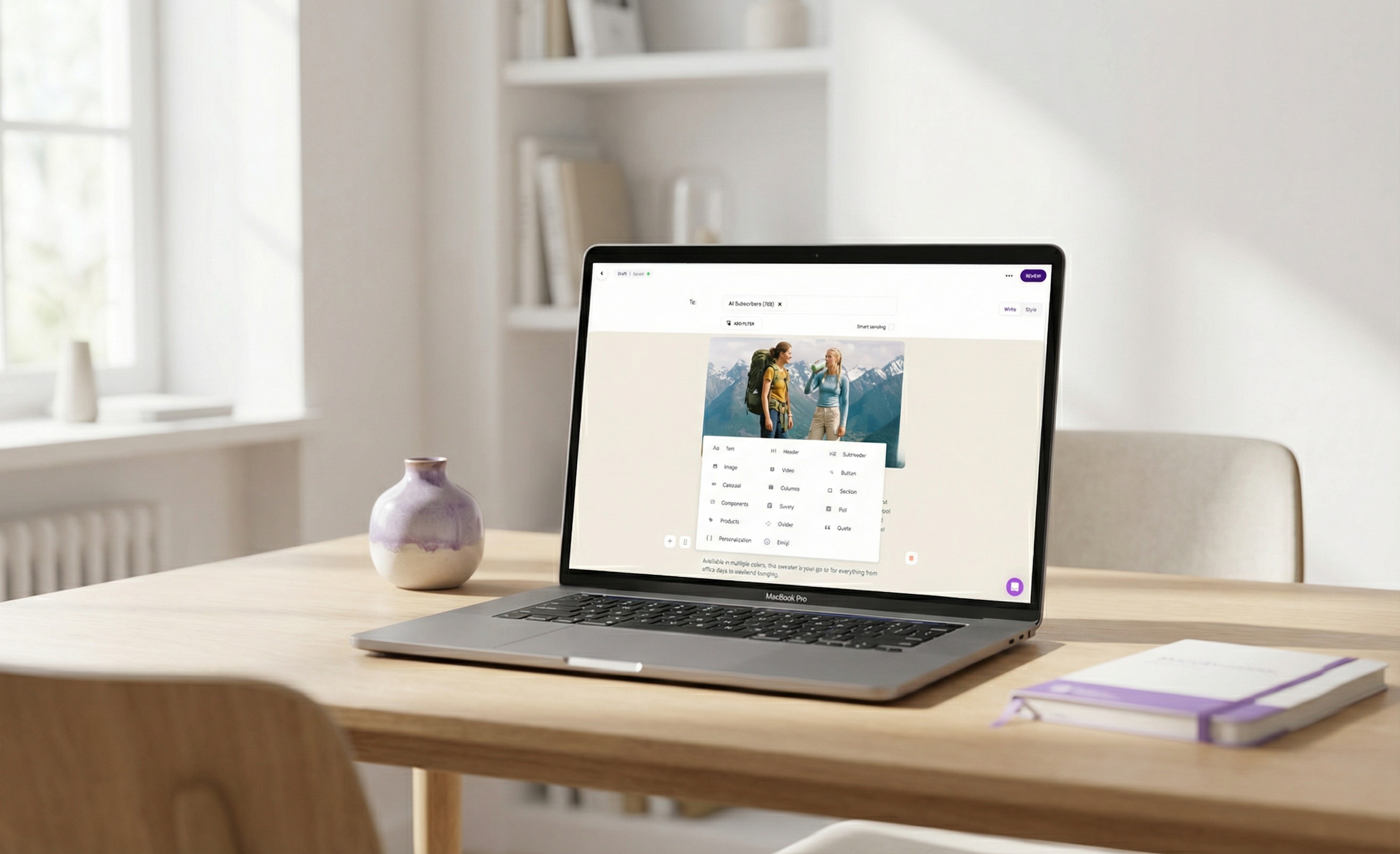
Omnisend — A solid mid-range option with good Shopify integration, an intuitive interface, and more affordable contact-based pricing than Klaviyo. Best for stores that want more features than basic tools offer but don't need Klaviyo's full depth. Read our Omnisend vs Klaviyo comparison for a detailed breakdown.
Mailchimp — The most recognizable name in email marketing, Mailchimp has improved its Shopify integration significantly. Its pricing is competitive at lower tiers, though it gets expensive at scale. Read our Klaviyo vs Mailchimp comparison for more detail.
FAQ: Klaviyo Review
Is Klaviyo worth it for small Shopify stores?
For most small Shopify stores (under 5,000 subscribers and less than $20K/month in revenue), Klaviyo's pricing outpaces the value you'll realistically extract from the platform. The advanced segmentation, predictive analytics, and complex flow capabilities that justify Klaviyo's premium require a larger customer base and more marketing resources to use effectively. Smaller stores typically get equal or better results from more affordable, simpler platforms.
What are Klaviyo's biggest pros and cons?
Klaviyo's biggest strengths are its deep Shopify integration, advanced segmentation engine, predictive analytics, and powerful flow builder. Its biggest weaknesses are aggressive contact-based pricing that scales quickly, a steep learning curve that can overwhelm small teams, and customer support that varies in quality depending on your plan tier. The platform is excellent for stores with the scale and resources to use it fully, but it's expensive for stores that only use basic features.
How much does Klaviyo cost per month?
Klaviyo's free plan covers 250 contacts and 500 emails per month. Paid plans start at $20/month for 500 contacts (email only). At 5,000 contacts, expect to pay around $100/month. At 25,000 contacts, the bill reaches approximately $400/month. The Email + SMS plan costs more at every tier, and SMS credits are an additional metered cost. All active profiles count toward your bill, even if you haven't emailed them recently.
Is Klaviyo better than Omnisend for Shopify?
Klaviyo offers deeper analytics, more advanced segmentation, and stronger predictive features than Omnisend. However, Omnisend is more affordable at every contact tier, easier to learn, and offers faster customer support. For data-driven stores with large lists and dedicated marketing resources, Klaviyo is the stronger platform. For growing stores watching their budget, Omnisend delivers better value. See our full Omnisend vs Klaviyo comparison for a detailed analysis.
Can I switch from Klaviyo to another platform without losing data?
Yes. Most modern email marketing platforms support importing subscriber lists, segments, and basic flow structures from Klaviyo. The migration process typically involves exporting your contacts and segments from Klaviyo as CSV files, then importing them into your new platform. Keep in mind that complex Klaviyo flows with advanced branching, predictive triggers, and conditional logic won't transfer 1:1 — you'll need to rebuild those in your new platform's automation builder.
Does Klaviyo have good email deliverability?
Klaviyo maintains strong deliverability infrastructure. Shared IPs are managed across their sender pool, and higher-tier plans offer dedicated IP options for stores that want full control over their sender reputation. That said, deliverability is more about your sending practices than your platform choice. Proper list hygiene, consistent sending schedules, authentication (SPF, DKIM, DMARC), and subscriber engagement matter far more than which tool you use.
Is Klaviyo's free plan enough to get started?
Klaviyo's free plan (250 contacts, 500 emails per month) is useful for testing the platform's interface and building your first flows, but it's not viable for running real campaigns. Most Shopify stores will outgrow the free tier within their first month of actively collecting email subscribers. Think of it as a trial, not a long-term plan.
Final Verdict
Klaviyo deserves its reputation as one of the most powerful email and SMS marketing platforms for e-commerce. The Shopify integration is genuinely best-in-class, the segmentation and analytics capabilities are unmatched by most competitors, and the flow builder can handle virtually any automation scenario you can imagine.
But power isn't the same as fit.
For high-volume Shopify stores with the revenue, the team, and the data to leverage everything Klaviyo offers, it's an outstanding investment that will pay for itself many times over. For the majority of Shopify stores — those with smaller lists, simpler needs, and tighter budgets — Klaviyo is more tool than you need at a higher price than you should pay.
The right email marketing platform is the one that matches your current reality, not your aspirational future. If Klaviyo is that match, use it confidently. If it's not, there are excellent alternatives for Shopify stores that will serve you just as well for less.